

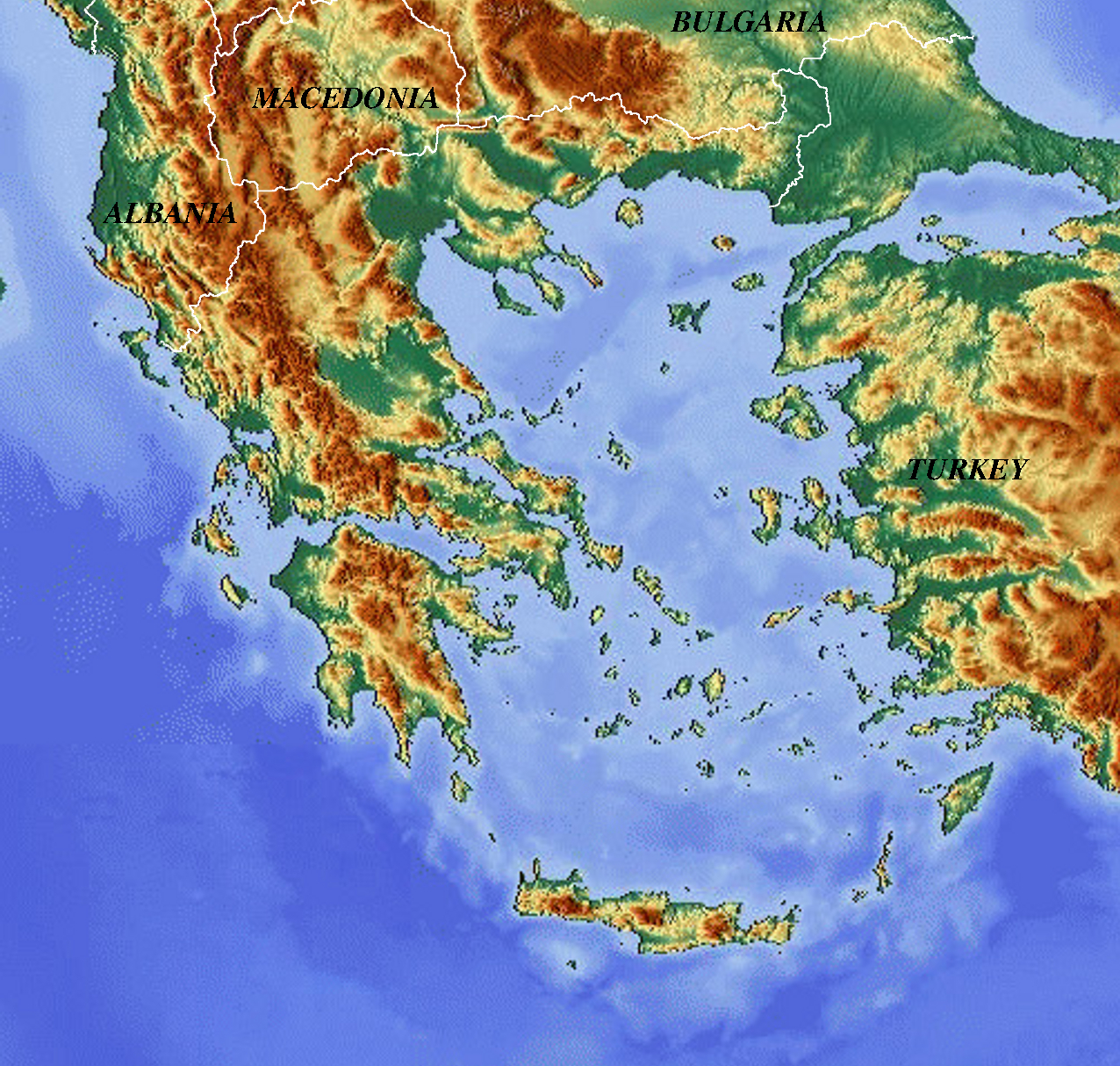
Physical Map of Greece
Greece has a long history and rich cultural heritage. She is considered the heir to ancient Greece, the cradle of all Western civilization, the birthplace of democracy, philosophy, the Olympic Games, many basic scientific theorems, western literature, historiography, political science, and theater, both comedy and drama.
Outside the continental part, Greece includes about 2,500 islands, including 165 inhabited, and spans 13,676 km of coastline. Cities like Athens and Thessaloniki, along with islands such as Santorini, Mykonos, Rhodes, Corfu, Lesbos, Crete, and the Chalkidiki peninsula, are some of the country's major tourist destinations. Greece additionally promotes religious tourism to legendary places such as the monasteries in Meteora and Mount Athos.
Greece has a Mediterranean climate along its coasts and islands, with mild, wet winters and hot, dry summers. Once inland, many mountainous areas experience a traditional continental climate. Economically, the Greek Merchant Navy is the largest in the world, backed by a significant shipbuilding and ship maintenance industry. Greece is also a notable producer of cotton, pistachios, rice, figs, almonds, and tomatoes. Reflecting its geography, Greek cookery makes wide use of vegetables, olive oil, grains, fish, wine, olives, pasta, cheese, lemon juice, herbs, bread, and yogurt.
Greece - Statistical Data (UN Data 2018)
Geography & Population
- Population: 11,142,000
- Surface Area: 131,957 km²
- Pop. Density: 86.4 / km²
- Forested Area: 31.5% of land
Economy & GDP
- GDP (Gross Domestic Product): $192,691,000,000
- GDP Growth Rate (Annual): -0.2%
- GDP Per Capita: $17,230
- International Trade (Exports): $32,155,000,000
- International Trade (Imports): $55,301,000,000
Employment by Sector
- Services Sector: 72.8%
- Industry Sector: 15.3%
- Agriculture Sector: 11.9%